The following guide explains how Melodic Intonation Therapy works, who it helps most after stroke or Traumatic Brain Injury (TBI), and how speech therapists use it alongside other treatments to support speech recovery.
What is Melodic Intonation Therapy?
Melodic Intonation Therapy (MIT) is a treatment created in the 1970s by speech therapists to help people who have trouble speaking after a stroke or TBI. The therapy is based on the idea that the brain handles speech and singing in different areas. Speech is usually controlled by the left side of the brain, while singing is managed by the right side.¹ If a person experienced damage on the left side of their brain, therapists can encourage stroke survivors to sing words rather than speak them.
How Does Melodic Intonation Therapy Work?
After a stroke, changes in the brain can make it harder for a person to express their thoughts and ideas. MIT helps by using the musical parts of speech, such as pitch, rhythm, and stress (emphasis on words or syllables).² Speech therapists encourage the person to “sing” or intone their words in a steady, melodic way. This approach activates the right side of the brain, which can help make up for damaged speech areas on the left side. Over time, this can help people speak more clearly and more naturally.
MIT uses many techniques, such as rhythmic tapping and speaking in a sing-song voice, to help retrain the brain and improve communication. The therapy is based on the idea that speech is more than just words; it also includes melody.
Techniques Used in Melodic Intonation Therapy
Speech-language pathologists (SLPs) trained in MIT use this approach to help people with speech difficulties caused by conditions such as stroke, TBI, or autism. Below is an overview of the most common techniques used in Melodic Intonation Therapy:³
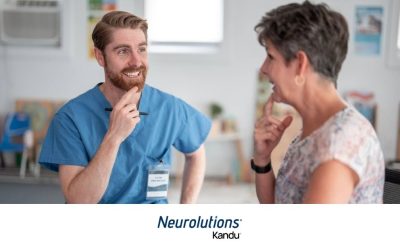
- Humming: The therapist first introduces a phrase, such as “eating a pancake with syrup,” often using a picture as a visual aid. The therapist then sings the phrase to model how it should sound. The patient is encouraged to hum along, matching each syllable. Once the patient can hum the phrase correctly, they begin saying the words out loud, slowly transitioning from humming to clear speech.
- Immediate repetition: The therapist says a phrase or sentence, and the patient repeats it right away. This helps the patient practice copying speech patterns and sounds, which is an important step in rebuilding speech skills.
- Unison Intoning: The therapist and patient say a phrase or sentence together. Sharing the same rhythm and melody helps the patient follow along and learn the speech pattern more easily.
- Unison Intoning with Fading: The therapist and patient start by saying a phrase or sentence together. Over time, the therapist reduces their involvement until the patient is saying the entire phrase on their own.
- Responding to Questions: After the patient repeats a phrase, the therapist turns it into a question. The patient then responds by answering the question.
Melodic Intonation Therapy follows a hierarchical approach, meaning it begins with simple tasks and gradually becomes more challenging as the patient improves. For example, therapy may start with one-syllable words and then move to two-syllable words, followed by longer and more complex sentences.⁴
The Benefits of Melodic Intonation Therapy for Stroke Survivors
A stroke damages areas of the brain that are responsible for planning, controlling, and coordinating movement. Although the nerves and muscles themselves are usually intact, injury to the brain disrupts how movement signals are generated and sent. This can make it difficult to move parts of the body, including the arm, leg, or the muscles used for speech and swallowing.
For example, some stroke survivors experience weakness or paralysis on one side of the face or tongue, which can make swallowing or speaking clearly difficult.
Additionally, many survivors experience speech problems such as aphasia, a condition that affects a person’s ability to understand or produce speech. While aphasia can impact both understanding and speaking, difficulty with speaking is more common in stroke survivors. About one-third of stroke survivors are affected by aphasia.⁵
In aphasia, the brain has trouble sending the correct “messages” to the mouth and throat. As a result, words may come out incorrectly, or the person may struggle to speak clearly, even when they know exactly what they want to say.
In addition to improving speech, MIT can also help improve understanding of spoken language. It stimulates neuroplasticity, which is the brain’s ability to form new nerve pathways to replace those damaged by a stroke. MIT supports neuroplasticity by using music and rhythm to retrain the brain and can be effective in helping stroke survivors to improve their ability to speak.

Non-Fluent Aphasia and the Use of Melodic Intonation Therapy:
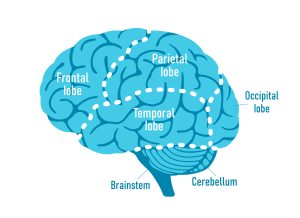
Non-Fluent Aphasia, also called Broca’s aphasia, is a condition in which a person has difficulty speaking clearly. They may speak in short, broken sentences and struggle to produce words or sounds. This happens because of damage to the Broca region of the brain, which is located in the frontal lobe. For most right-handed people, this area is in the left hemisphere of the brain, while for many left-handed people, it is in the right hemisphere.
In contrast, Wernicke’s Aphasia affects a person’s ability to understand speech and is caused by damage to the Wernicke area, which is located in the back part of the temporal lobe of the brain. This area is usually found in the left hemisphere. People with Wernicke’s aphasia can often speak smoothly, but their speech may not make sense, and they often have trouble understanding what others are saying.
This type of aphasia can be especially difficult to treat and may make recovery more challenging during therapy since the person may have trouble understanding and following instructions. While MIT can be used by speech therapists to help stroke or TBI survivors with Wernicke’s aphasia, it is usually more effective for those with Broca’s aphasia. This is because their main challenge is producing words, rather than understanding language.
Using Melodic Intonation Therapy with Other Forms of Speech Therapy:
MIT is often used alongside other types of speech therapy to help people recovering from stroke or TBI who are struggling with aphasia. Additional traditional speech therapy strategies often include:
- Supported Conversation: The speech therapist and patient take part in two-way conversations. The therapist offers cues, asks questions, and provides prompts to help the patient express their thoughts more clearly.
- Conversational Coaching: The speech therapist chooses a topic for the patient to discuss with another person. The goal is to improve communication using speech, gestures, and sometimes pictures, helping the patient feel more confident in real-life conversations.
- Drill-Based Exercises: These exercises focus on building sentences and using words correctly. The therapist may ask the patient to turn a statement into a question or practice sentences using different nouns, adjectives, and verbs.
- Script Training: This approach focuses on practicing specific phrases and sentences that are helpful for everyday activities, such as eating, bathing, and dressing.
The Difference between Music Therapy and Melodic Intonation Therapy:
While both music therapy and MIT can be helpful for stroke survivors, they serve different purposes. Music therapy is a broad approach used to improve mood, thinking skills (such as memory and focus), speech, and physical movement. MIT is a more specialized form of music therapy that focuses specifically on improving speaking ability. Because of the close connection between music and speech, it can be helpful for speech therapists who use MIT to have training in general music therapy.⁶
It is also important to note that about 70% of stroke survivors with aphasia experience long-term depression after a stroke.⁷ This depression can make it harder for them to stay motivated during therapy. In these cases, music therapy that focuses on improving mood can be a powerful tool. By increasing engagement in speech therapy sessions, it may help improve the chances of regaining lost speech skills.
How Melodic Intonation Therapy Helps Speech Recovery After Stroke
For people recovering from stroke or TBI, brain damage can affect the ability to speak but does not always remove the ability to sing simple tunes or phrases. This is because singing and speech are controlled by different areas of the brain. MIT uses the ability to sing as a “launching pad” to help patients rebuild speech skills. However, the way MIT is used can differ for children, adults, and individuals on the autism spectrum.
Alternatives to Melodic Intonation Therapy
While MIT is a popular approach, speech therapists use several other techniques to help stroke and TBI survivors diagnosed with apraxia. These methods focus on improving speech by retraining the brain and muscles involved in speaking.
- Sensory Cueing: This technique uses multiple senses to help patients say words more easily. For example, a speech therapist may give verbal cues, such as saying the first sound or letter of a word, or provide physical guidance by gently helping the patient position their mouth correctly to pronounce the word.
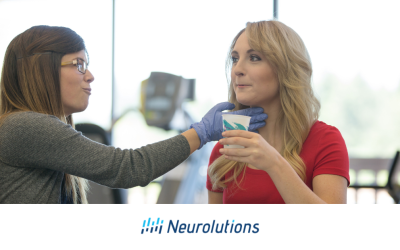
- PROMPT (Prompts for Restructuring Oral Muscular Phonetic Targets): PROMPT is a hands-on technique in which the speech therapist gently touches and guides the person’s jaw, tongue, and lips to help them correctly say a word, phrase, or sentence.
- Articulate Kinematic Approach (AKA): This approach focuses on the movement patterns and motor planning needed for speech. The therapist may help position the patient’s lips to form a word, use visual and auditory cues, and model the correct pronunciation for the patient to copy.
These alternatives can be used alongside MIT and other music therapy approaches in order to tailor treatment to each patient’s needs.
Conclusion
Strokes, traumatic brain injury (TBI), and other brain disorders can cause communication challenges such as aphasia and apraxia. These conditions can make it difficult for a person to express their thoughts or coordinate the movements needed for speech.
Melodic Intonation Therapy (MIT) is a specialized approach used by speech therapists that uses singing and rhythm to stimulate neuroplasticity, the brain’s ability to form new nerve pathways. This helps survivors relearn how to speak and communicate more effectively. When combined with other techniques such as sensory cueing, PROMPT, and AKA, MIT not only supports speech recovery but may also improve thinking skills like memory and problem-solving, helping create a more complete path to recovery.
©2025 Kandu, Inc. All Rights Reserved. | 8090.1029.E
References:
- Callan DE, Tsytsarev V, Hanakawa T, et al. (2006). Song and speech: Brain regions involved with perception and covert production. Neuroimage 31(3): 1327-1342. Webpage: https://pubmed.ncbi.nlm.nih.gov/16546406/.
- American Speech-Language-Hearing Association (ASHA). Acquired Apraxia of Speech. Webpage: https://www.asha.org/practice-portal/clinical-topics/acquired-apraxia-of-speech/
- Norton A, Zipse L, Marchina S, et al. (2009). Melodic Intonation Therapy: Shared insights on how it is done and why it might help. Ann N Y Acad Sci 1169: 431-436. Webpage: https://www.ncbi.nlm.nih.gov/pmc/articles/PMC2780359/
- Zhang X, Li J, and Du Y. (2022). Melodic Intonation Therapy on Non-fluent Aphasia After Stroke: A Systematic Review and Analysis on Clinical Trials. Frontiers in Neuroscience 15: 753356. Webpage: https://www.ncbi.nlm.nih.gov/pmc/articles/PMC8829877/
- Enderby P, and Sutton L. (2020). Where are we now with aphasia after Stroke? Annals of Indian Academy of Neurology 23(Suppl 2): S57-S62. Webpage: https://www.ncbi.nlm.nih.gov/pmc/articles/PMC7731688/
- Wanicharoen N, Boonrod V, Kalaysak T, et al. (2024). A systematic review of melodic intonation therapy used by speech therapists on speech recovery for patients with non-fluent aphasia. Journal of Associated Medical Sciences 57(3): 212-220. Webpage: https://he01.tci-thaijo.org/index.php/bulletinAMS/article/view/271043
- Kauhanen ML, Korpelainen JT, Hiltunen P, et al. (2000). Aphasia, depression, and non-verbal cognitive impairment in ischaemic stroke. Cerebrovascular Disease 10(6): 455-461. Webpage: https://pubmed.ncbi.nlm.nih.gov/11070376/