What is Muscle Twitching after Stroke?
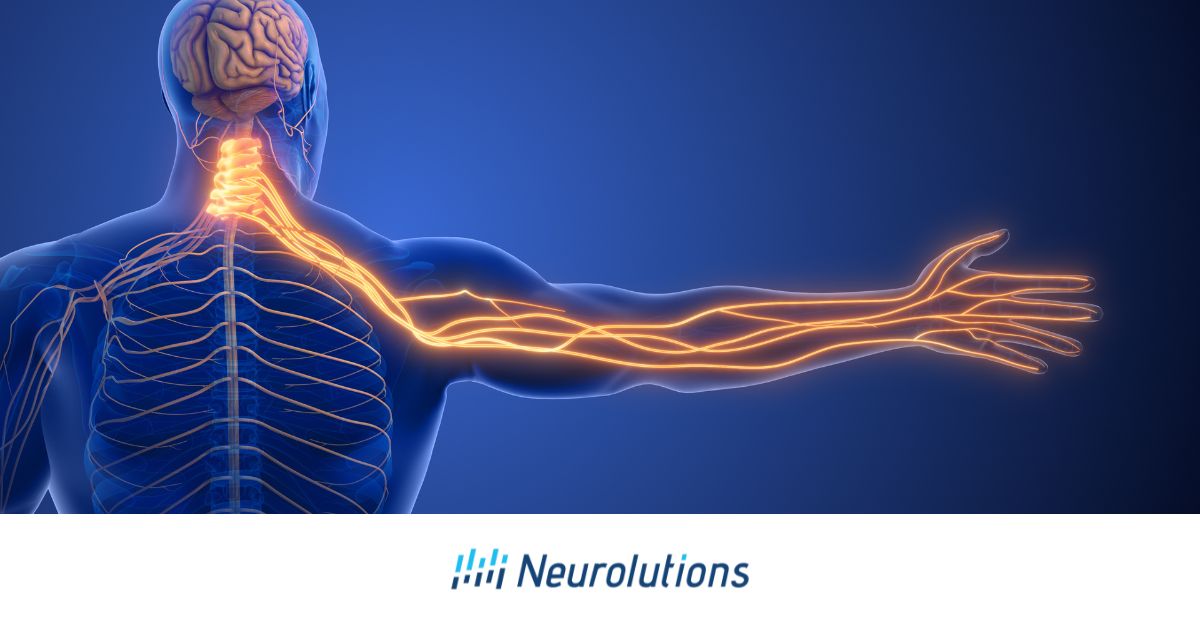
Muscle twitching happens when nerve messages get mixed up on their way to your muscles.
Muscle Twitching Definition and Causes:
Paralysis or weakness on one side of the body is a common result of stroke, because part of the brain is injured during the stroke. When this happens, nerve signals can get crossed, leading to involuntary muscle twitches. As a result, stroke survivors may experience muscle twitching.
Each muscle in the human body is made up of tiny fibers, and every fiber has nerves.1 When a person wants to move an arm, leg, hand, or foot, the brain sends nerve “messages” to make the movement happen. All the muscle fibers need to receive the same, correct message to move smoothly or stay still. If they don’t, twitching can occur.
Why Muscle Twitching or Spasticity Occurs in Stroke Survivors
Muscle twitching happens when some muscle fibers get the wrong nerve “message” and tighten instead of staying relaxed.
The Role of the Nervous System Network in Muscle Twitching:
Nerves in the brain send signals, or “messages,” to the spinal cord, which then passes them on to the muscles to contract or relax. Mistakes in this nerve messaging can occur anywhere along the pathway, and people with strokes or Traumatic Brain Injury (TBI) often experience these problems. Proper muscle contraction and relaxation are needed for everyday activities, such as feeding oneself or walking.
Brain “Neuroplasticity” Role in Muscle Twitching:
After paralysis or weakness, new brain and nerve cells can grow to take the place of the ones that were destroyed by the brain injury or stroke; this is called neuroplasticity. These new cells can help recovery by improving the nerve pathways used to communicate muscle movement. However, if muscles are not used, they can quickly become stiff, weak, and harder to move, which can slow recovery.2
That’s why therapy often includes joint range-of-motion exercises and stretching. Even paralyzed limbs should be exercised because the joints are connected to muscles that help the body move in the positions needed for everyday activities, like walking or picking up a phone.
Some Common Causes of Muscle Twitching:
For most stroke survivors, muscle twitching tends to decrease as coordinated movement returns to the paralyzed arm or leg. However, some nerve “messages” can still be incorrect as a person recovers, causing a muscle twitch. Common causes of muscle twitching include:
- Stress and anxiety: When a person feels anxious, the brain releases certain chemicals that can increase the chance of nerve signal errors, which may lead to a muscle twitch.
- Lack of sleep: The brain needs enough sleep each day to function properly. Without it, new brain and nerve cells cannot grow quickly enough to replace dying ones. This can lead to muscle twitching, because the nerve cells are not working at their best.
- Medications: Some prescription medications and hormone treatments can cause muscle twitches as a side effect.
- Dehydration: When the body loses water and the normal balance of electrolytes is disrupted, involuntary muscle twitching can occur. This happens because nerves and muscles need the right amount of certain electrolytes to work properly.
- Poor diet: Nutrition from food helps keep all the cells in the body healthy, including nerve and muscle cells. If a person’s daily diet does not provide enough vitamins and minerals, these cells cannot function properly, which can lead to muscle twitching.
Muscle Twitching – The Impact on “Quality of Life”
Muscle twitching can cause pain that affects daily activities and emotional well-being.
Muscle twitching can be painful in stroke and TBI survivors. The twitches can impact their desire to participate in occupational therapy or physical therapy (OT and/or PT) needed for full recovery.
Frequent muscle twitches can also be painful because the repeated tightening of the affected muscles can make them sore. Additionally, a stroke or TBI survivor might tense up while anticipating pain from a muscle twitch, making the muscle hurt more.
Pain from muscle twitching can make a person less willing to take part in OT and/or PT and in activities they once enjoyed, thus impacting their recovery and overall quality of life.
Managing the Challenges of Post-Stroke Muscle Twitching:
Several treatment approaches can help reduce muscle twitching.
For many stroke and TBI survivors, muscle twitching can be frustrating during early participation in OT and/or PT, and can reduce motivation to do therapy exercises. The support and encouragement from therapists, as well as from the survivor’s family and friends, can help the person keep up with therapy exercises, which may gradually reduce muscle twitching.
Additionally, therapists may use splints, braces, and therapeutic techniques in order to relieve muscle twitching during the therapy sessions and/or outside of therapy sessions. Those who stay engaged in social activities and hobbies may experience less muscle twitching. Focusing too much on the twitching can actually make it worse, so keeping the mind occupied can help reduce it.

Tracy is an Opera Singer, Artist, Activist, and Stroke Survivor.
Coping with Muscle Twitching after a Stroke or TBI
Staying involved in rehabilitation therapies and using adaptive equipment can improve recovery and daily independence.
Importance of Physical, Occupational, and other Rehab Therapies after a Stroke or TBI:
It is crucial for stroke survivors to not get discouraged and stop participating in prescribed rehab therapies. Instead, discussing muscle twitching with their rehab team or physician can help identify solutions to reduce it. For some stroke or TBI survivors, oral medication or surgery may lessen the pain that comes with the muscle twitching. In turn, this may encourage the person to fully participate in therapy exercises.
Adaptive Equipment for Stroke or TBI Survivors with Frequent Muscle Twitching:
To make everyday activities, like feeding themselves, easier, stroke or TBI survivors can use the following strategies as needed:
- Eating utensils that have large, rubber grips or are weighted that are easier to grasp
- Using other grip aids such as tools for gripping pencils and pens
- Having long handles for commonly-used items like a hairbrush or long-handled shoe horn
- Using larger writing tools and wide-ruled paper
- Having button hooks that can make it easier to button clothing
Conclusion
Understanding and managing muscle twitching can help stroke survivors improve their recovery and quality of life.
People who experience one-sided paralysis or weakness after a stroke or TBI often have muscle twitching. This happens because the injury damages brain and nerve cells, causing mixed-up nerve “messages” to the muscles. As the affected arm, leg, or other body part begins to recover movement, muscle twitching often appears.
The brain’s ability to rewire itself, called neuroplasticity, allows new nerve pathways to form and replace damaged ones. Re-learning motor skills and doing engaging therapy activities can strengthen these new pathways, improving both movement and thinking skills. Reducing stress, anxiety, and other factors like poor sleep, dehydration, or side effects from medications can also help lessen muscle twitching. With ongoing therapy, medical support, and encouragement, stroke and TBI survivors can regain independence, improve well-being, and enjoy a better quality of life.
©2025 Kandu, Inc. All Rights Reserved. | 8090.943.E
References:
- National Cancer Institute (NCI) [Seer Training Modules]. Structure of Skeletal Muscle. Webpage: https://training.seer.cancer.gov/anatomy/muscular/structure.html#:~:text=An%20individual%20skeletal%20muscle%20may,in%20a%20connective%20tissue%20covering.
- Cleveland Clinic [Cleveland, OH]. Muscle Atrophy. Webpage: https://my.clevelandclinic.org/health/diseases/22310-muscle-atrophy