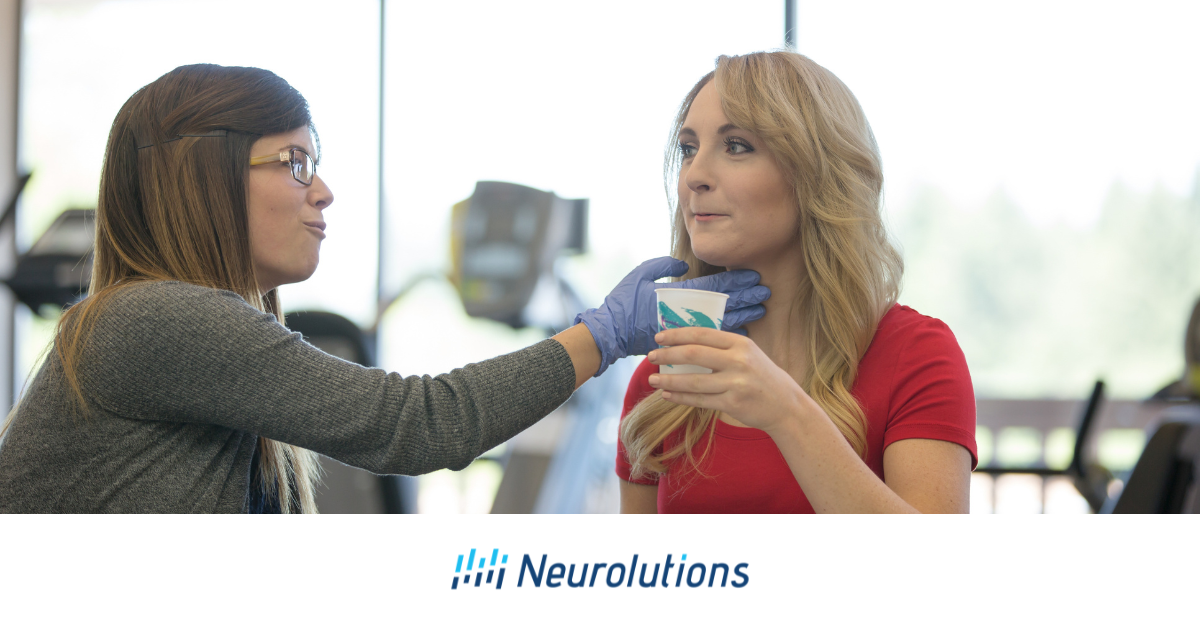
The following guide explains how speech therapy helps stroke survivors recover communication and swallowing skills, what conditions speech-language pathologists treat, and how early therapy supports long-term recovery.
How Stroke Affects Communication and Swallowing
Stroke can disrupt the brain’s ability to control swallowing, speech, and language.
When a stroke damages certain parts of the brain, it can make it harder to talk and swallow. The location of the stroke and how much the brain is injured can impact which skills are affected. Some people struggle to find the right words, others have trouble moving their muscles, and many face challenges with both speaking and swallowing.
Understanding the different types of communication problems can help families and care partners know what to expect during recovery, because each condition requires different approaches of treatment and support.
Types of Speech and Language Disorders After Stroke
Stroke can cause several communication disorders, such as:
Aphasia
Aphasia affects language processing, which is how the brain understands and produces words and sentences.1 People with aphasia may know exactly what they want to say but can’t find the words, or they might use the wrong words without realizing it. Some struggle to understand what others are saying, based on changes in their brain’s ability to process language.
Dysarthria
Dysarthria happens when a stroke weakens the muscles needed for clear speech.1 The person’s language skills remain intact, but their words come out slurred or unclear because they can’t control their tongue, lips, or vocal cords properly.
Apraxia
Apraxia affects the brain’s ability to plan and coordinate the movements needed for speech.1 Even when the muscles are strong enough, the brain can’t send the right signals to make the mouth move in the correct patterns for words.
Aphasia Doesn’t Affect Intelligence
One of the most important things to understand about aphasia is that it doesn’t change a person’s intelligence or thinking ability.2 Someone with aphasia remains mentally alert and continues to have the same thoughts, feelings, and personality they always had.
Imagine looking at a newspaper and suddenly being unable to recognize familiar words, or trying to say “put the car in the garage” but having it come out as “put the train in the house.” The person’s mind still works normally; the problem is the disconnect between their thoughts and their ability to understand or produce words.
People with aphasia can feel confused and frustrated because they can’t communicate the way they did before their stroke. Family members may mistakenly think their loved one’s thinking has been affected when really it’s just the language system that’s been damaged.
Swallowing Problems Can Accompany Communication Issues
Many stroke survivors also develop swallowing difficulties, called dysphagia.3 This can happen because speaking and swallowing use many of the same brain areas and muscles. When these systems are damaged, food or liquid can go down the wrong path toward the lungs instead of the stomach, creating serious health risks.
Speech-language pathologists (SLPs) assess and treat both communication and swallowing problems because they’re closely connected. For example, someone might have trouble coordinating their tongue and throat muscles for both clear speech and safe swallowing.

Role of Speech‑Language Pathologists (SLPs)
Speech-language pathology is the field where professionals (SLPs) diagnose, assess, and treat cognitive, communication, voice, speech, language, and swallowing disorders.
SLPs work with stroke survivors to assess how they can speak, understand language, think through communication tasks, and swallow safely. Rather than taking a one-size-fits-all approach, they create individualized treatment plans based on each person’s specific challenges and goals. Someone might need help getting back to work conversations, while another person focuses on communicating basic needs at home.
The most effective stroke care happens when SLPs work closely with other healthcare professionals as part of an integrated team.4 Research shows that when SLPs collaborate with nurses, doctors, occupational and/or physical therapists, and other specialists, patients receive more comprehensive care that addresses more aspects of recovery. SLPs might guide therapists on communication strategies during movement exercises, or work with nurses to develop safe swallowing protocols that prevent complications.
Therapies and Techniques
Speech-language pathologists (SLPs) use a combination of evidence-based therapies to help stroke survivors regain communication skills and swallow safely. The specific approach depends on the type of stroke, the areas of the brain affected, and each person’s recovery goals.
Communication-Focused Therapies
These therapies aim to improve speech, language, and overall communication ability:
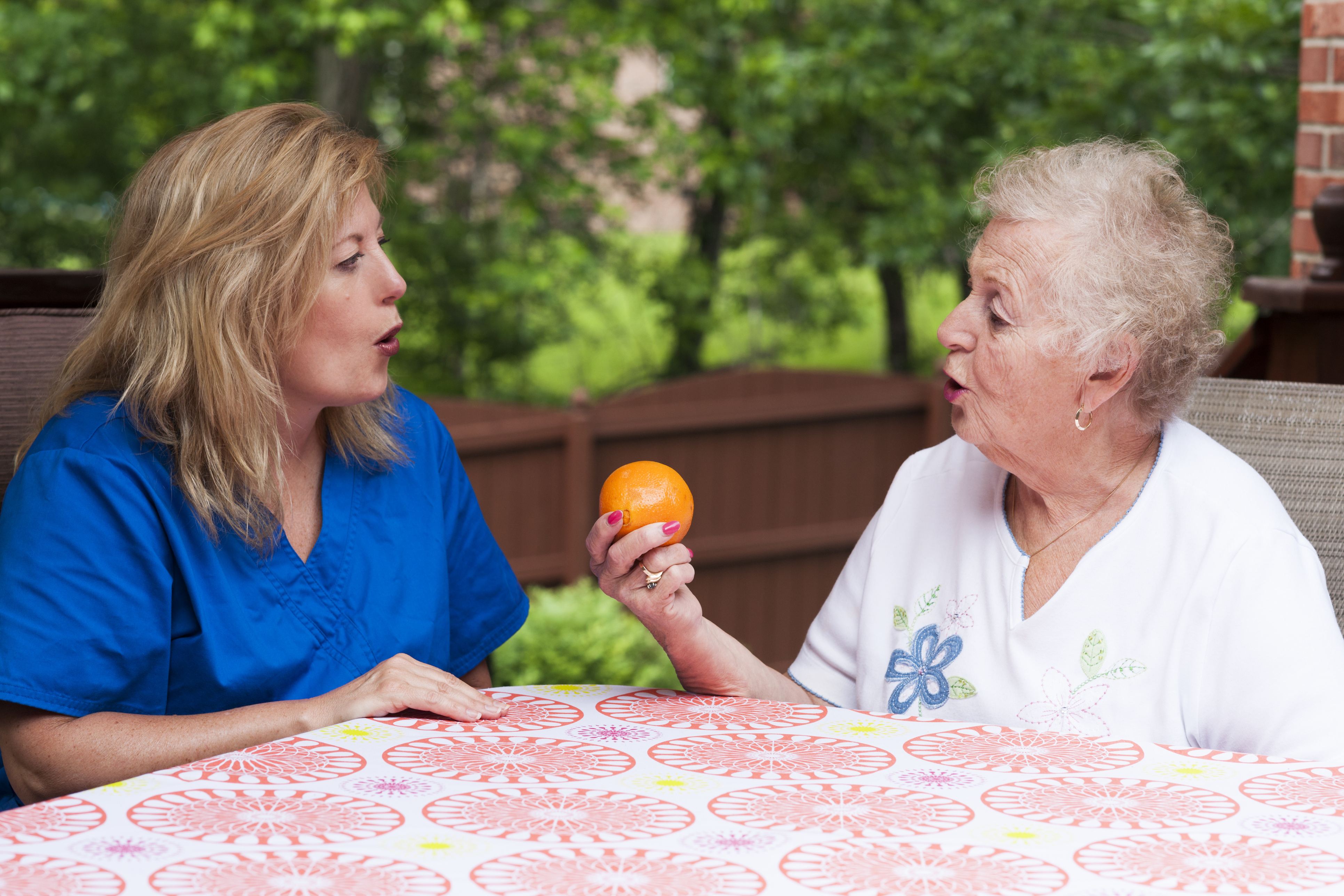
- Repetitive practice exercises: Repeating speech sounds, words, and phrases helps the brain rewire and heal through neuroplasticity. High-intensity, repetitive practice strengthens neural connections and supports language recovery over time.5
- Singing therapy: Singing and rhythm can activate the right side of the brain, which may help stroke survivors with left-brain damage find new pathways for speech. Patients often practice speaking using musical patterns and familiar melodies to support verbal expression.
- Communication devices and group sessions: SLPs may introduce communication boards, tablet apps, or other assistive tools that allow people to express thoughts through pictures, symbols, or typed words. Group therapy sessions provide opportunities to practice communication skills in supportive, real-life social settings.
Swallowing-Focused Therapies
Therapies focus on improving safety and efficiency during eating and drinking, including swallowing safety training. This type of training teaches specific techniques and recommends appropriate food textures to reduce the risk of aspiration, which occurs when food or liquid enters the lungs instead of the stomach. SLPs also work with care partners to support safe swallowing at home.
 |
|
Benefits of Speech Therapy
Speech therapy can provide measurable improvements in communication skills while helping stroke survivors regain confidence in social situations.
Research shows that speech therapy delivers significant benefits for stroke survivors with communication problems. Studies have found that aphasia treatment can lead to meaningful improvements in everyday communication, understanding language, reading, and writing compared to getting no treatment.6 People who participate in speech therapy see real progress in their ability to understand conversations, express their thoughts, and handle everyday communication tasks.
Beyond the technical improvements in language skills, speech therapy helps stroke survivors rebuild meaningful connections with their families and communities. Research reveals that stroke survivors value speech therapy not just for regaining words and sentences, but for restoring their autonomy and ability to participate actively in their daily lives.7
Home Exercises and Caregiver Support
Simple daily activities like reading aloud, naming common household objects, and engaging in short conversations help maintain progress between appointments. Care partners can play an essential role in recovery by creating a supportive environment where communication attempts are encouraged rather than corrected.
Patience is especially important during conversations, as stroke survivors may need extra time to find words or express their thoughts clearly. Many families benefit from connecting with stroke support groups, where they can share experiences and learn practical strategies from others who understand the challenges of communication recovery.
Early Intervention and Finding Qualified Help
The sooner speech therapy begins after stroke, the better the chances for meaningful communication recovery. This is because the brain’s ability to adapt and form new connections is strongest in the first few months after stroke.8 While improvements can happen at any stage of recovery, starting speech and therapy as soon as medically possible can help people regain their communication skills.
Finding the right SLP is crucial for effective treatment. Families should look for certified professionals who have experience working with stroke survivors and can create personalized treatment plans. The American Speech-Language-Hearing Association provides a directory service to help locate qualified SLPs.
Taking this first step toward professional help can open the door to regaining not just words and sentences, but confidence and independence in daily life.
©2026 Kandu, Inc. All Rights Reserved. | 8090.1040.E
References:
- Teasell, R., Hussein, N., Viana, R., Donaldson, S., and Madady, M. (2020). Stroke Rehabilitation Clinician Handbook: Clinical Consequences of Stroke. Webpage: http://www.ebrsr.com/sites/default/files/Chapter%201_Clinical%20Consequences_0.pdf
- American Stroke Association. Effects of Aphasia. Stroke.org. Webpage: https://www.stroke.org/en/about-stroke/effects-of-stroke/communication-and-aphasia/stroke-and-aphasia/effects-of-aphasia
- Cleveland Clinic. (2024). Dysphagia (Difficulty Swallowing). Webpage: https://my.clevelandclinic.org/health/symptoms/21195-dysphagia-difficulty-swallowing
- Charalambous, M., Pierce, J.E., Pastou, G., Kola, E., and Savitz, S.I. (2025). The Role of Speech and Language Therapists (SLTs) in International Stroke Teams: A Systematic Review. International Journal of Language & Communication Disorders, 60, e70062. Webpage: https://doi.org/10.1111/1460-6984.70062
- Mohr, B. (2017). Neuroplasticity and Functional Recovery after Intensive Language Therapy in Chronic Post Stroke Aphasia: Which Factors Are Relevant? Frontiers in Human Neuroscience, 11, 332. Webpage: https://www.ncbi.nlm.nih.gov/pmc/articles/PMC5487528/
- Brady, M.C., Kelly, H., Godwin, J., Enderby, P., and Campbell, P. (2016). Speech and language therapy for aphasia following stroke. Cochrane Database of Systematic Reviews, 6, CD000425. Webpage: https://www.cochranelibrary.com/cdsr/doi/10.1002/14651858.CD000425.pub4/full
- Xu, R., Wang, K., Samuel, O. W., Xie, Y., Fang, P., and Li, G. (2024). Stroke rehabilitation: from diagnosis to therapy. Frontiers in Neurology, 15, 1402729. Webpage: https://www.frontiersin.org/journals/neurology/articles/10.3389/fneur.2024.1402729/full
- Aderinto, N., AbdulBasit, M. O., Olatunji, G., & Adejumo, T. (2023). Exploring the transformative influence of neuroplasticity on stroke rehabilitation: a narrative review of current evidence. BMC Neurology, 23, 366. PMC. Webpage: https://pmc.ncbi.nlm.nih.gov/articles/PMC10473303/