How Stroke Affects Cognition
Stroke-related brain changes can disrupt memory, attention, and executive function, even when physical deficits are limited.
Cognitive problems (problems with thinking, remembering, or focusing) happen to a majority of stroke survivors. Up to 60% of people experience some kind of cognitive impairment within the first year after their stroke.1 Damage caused by a stroke can disrupt multiple areas of the brain involved in mental functioning, setting off a cascade of challenges.
The most common issues include trouble concentrating, memory loss, and problems with executive function, which is the brain’s ability to plan, organize, and make decisions.2, 3 Stroke survivors might forget appointments, lose track mid-conversation, or struggle to follow the steps in a familiar recipe. These cognitive difficulties can occur whether or not they have visible physical symptoms from stroke, which can be particularly frustrating because others might not realize they’re struggling.4
What Is Cognitive Rehabilitation?
Cognitive rehabilitation after stroke uses structured activities and exercises that strengthen mental processes.
Cognitive rehabilitation involves specific, targeted exercises designed to strengthen memory, attention, problem-solving, and other thinking processes that may have been affected by stroke.5 Speech-language pathologists (SLPs), occupational therapists (OTs), and neuropsychologists can guide patients through these structured activities that challenge the brain in progressive, measurable ways.6
The Science Behind Recovery: Neuroplasticity
The foundation of cognitive rehabilitation lies in neuroplasticity, the brain’s ability to reorganize and form new connections.7 When a stroke damages certain areas of the brain, healthy regions can actually take over some of the lost functions by creating new neural pathways. Cognitive therapy uses neuroplasticity by giving the brain the right kind of stimulation to help it rewire.
Patients can work with a therapist in clinical sessions, but many cognitive rehabilitation exercises can also be performed at home. The key is consistency and gradual progression. Just like building muscle strength, rebuilding cognitive abilities requires regular practice and increasing challenges over time.
Effective Exercises for Stroke Survivors
Cognitive exercises are often most effective when they incorporate repetition, progressive challenge, and consistent routine.
Patients’ brains need regular stimulation to strengthen the new connections they’re forming through neuroplasticity. They can start with exercises that feel manageable, then gradually increase difficulty as skills improve. The goal isn’t to master everything immediately, it’s to give the brain the repetitive practice it needs to “rewire” itself.
Memory Exercises:
These exercises can target different types of recall:
- Card matching games strengthen working memory by requiring someone to hold information temporarily while searching for pairs.
- Journaling helps with both immediate and long-term memory by encouraging people to record and reflect on daily events.
- A memory book used to write down important information, appointments, and reminders, is both an exercise and a practical tool for daily life.
Attention Training Exercises:
This type of training focuses on rebuilding the ability to concentrate and ignore distractions and can include:
- Trail-making tasks, where patients connect numbered or lettered dots in sequence, can improve focused attention and mental flexibility.
- Reading a short article and then summarizing the main points can help patients stay focused and understand what they’re reading.
- Focus games like spot-the-difference puzzles train the brain to maintain concentration while ignoring irrelevant information.8
Problem-Solving Exercises
- Logic puzzles, such as Sudoku or crosswords, exercise thinking skills and pattern recognition.
- Sequencing tasks, like organizing a set of pictures to tell a story or arranging steps for a recipe, can help rebuild executive function skills.
- Math problems, like starting with simple addition and working up to more complex problems, can strengthen analytical thinking and processing speed.
Dual-Task Training:
Research shows that dual-task training, performing motor and cognitive activities simultaneously, can improve both walking performance and cognitive function in stroke survivors. Real-world activities that require both physical and cognitive effort prepare patients for daily life situations such as:
- Walking while counting backwards divides the patient’s attention, requiring their brain to manage movement while processing numbers.
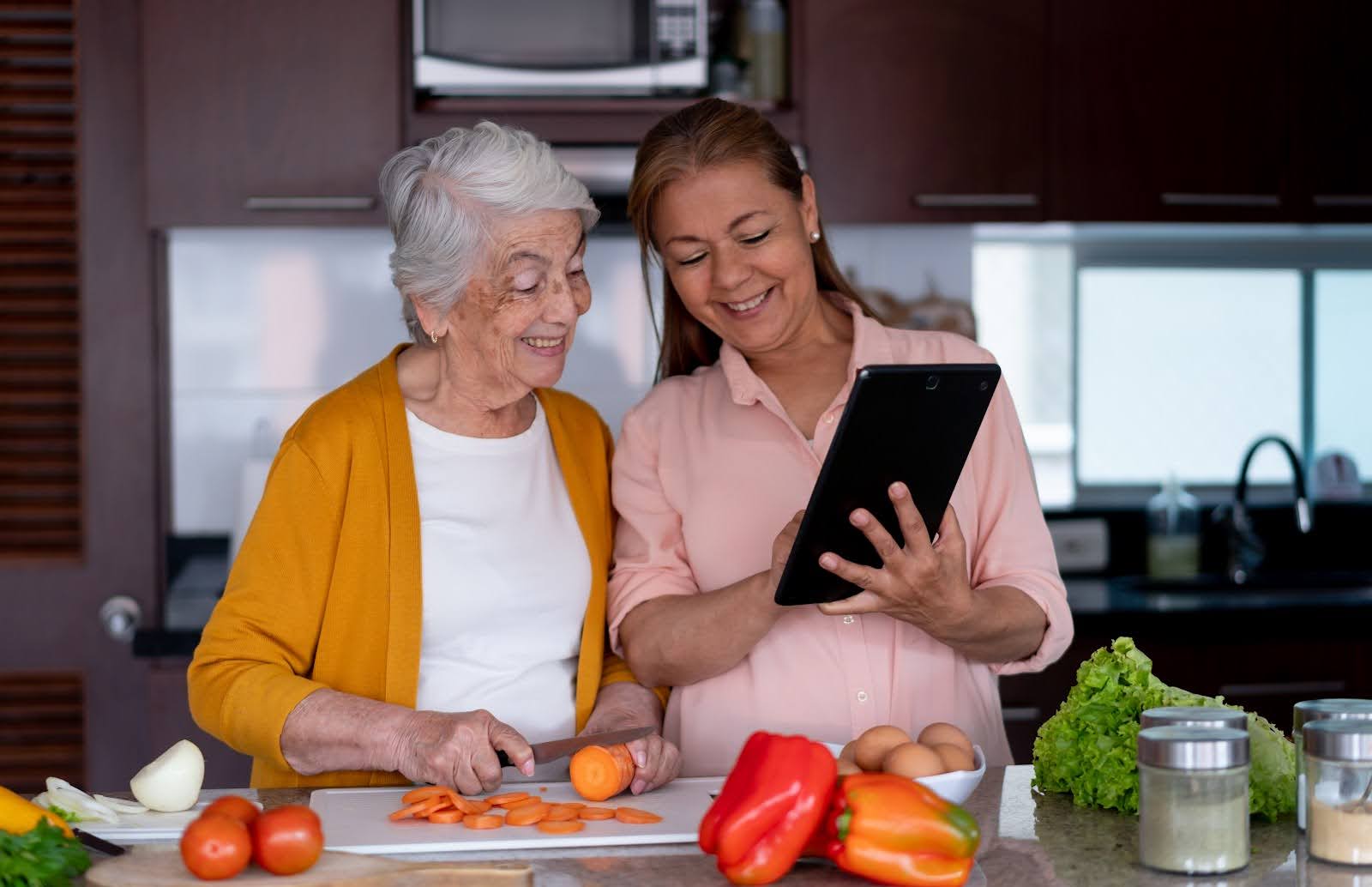
Activities like following a recipe while cooking engage multiple skills simultaneously: reading comprehension, sequencing, timing, and motor coordination. These exercises have people use their body and brain at the same time, just like they have to do in real life every day.9
Integrating Training into Daily Life
Some of the most effective cognitive rehabilitation happens when stroke survivors incorporate mental exercises into their everyday routines.
Real recovery comes from turning ordinary moments into opportunities for brain training. Instead of treating cognitive exercises as separate therapy sessions, stroke survivors can build mental strengthening directly into their regular daily activities.
Below are a few ways to put this into practice:
- Label household items and create visual schedules to support memory and organization skills. Patients or care partners can put simple labels on kitchen cabinets, drawers, and frequently used items to reduce the mental effort needed to find things. Visual schedules posted in prominent places, like a morning routine checklist by the bathroom mirror or a medication chart by the coffee maker, can serve as memory aids while helping to rebuild internal recall abilities.
- Turn everyday meals into opportunities for recall practice. Ask open-ended questions like, “What did you do this morning?” or “Name three things you’re grateful for today.” If the survivor gets stuck, provide hints or gentle guidance instead of quizzing or correcting them.
- Use brain games for stroke recovery through apps or computer programs to supplement daily practice.10 Technology offers accessible, structured cognitive training with difficulty levels that adjust to the patient’s progress. Many programs provide detailed tracking so users can see improvement over time, which helps maintain motivation.
 |
|
Getting Support from Professionals and Caregivers
Cognitive recovery after stroke works best when patients have the right team supporting their progress.
SLPs and OTs guide targeted activities designed specifically for patients’ cognitive challenges.11, 12 These specialists understand how stroke affects different mental processes and can design exercises that address each person’s particular situation. They track progress, adjust difficulty levels, and ensure people are working on skills that will translate to real-world improvements.
Care partners can help with encouragement, reminders, and structure, and help survivors keep cognitive training consistent. Family members and friends become essential allies in recovery when they understand how to provide support without taking over. They can help establish daily routines, offer gentle prompts for exercises, and celebrate small victories. The key is finding the balance between getting helpful assistance and maintaining patients’ independence.13
Monitor frustration levels and avoid overexertion, because cognitive fatigue could derail progress. The brain is working harder than usual to process information and learn patterns, which means people may get mentally tired faster than before their stroke. Both professionals and care partners need to watch for signs that the patient is pushing too hard, like increased confusion, irritability, or difficulty with tasks that were manageable earlier in the day.14
Tracking Progress and Staying Motivated
Monitoring small gains and setting achievable goals helps sustain motivation throughout the cognitive recovery process.
Motivation drives recovery, and documenting progress creates the momentum to keep going.
Keep a log of improvements and goals met, no matter how small they seem. Writing down when the patient remembers a grocery list without checking it twice, completes a crossword puzzle, or follows a conversation without losing track builds concrete evidence of recovery. Research shows that rehabilitation professionals consider goal setting one of the most effective motivational strategies for stroke patients, and tracking achievement of those goals provides essential feedback for continued progress.15
Patients can set short-term challenges that build momentum, rather than shooting for distant, vague targets. Instead of “I want to get my memory back,” people could try “I’ll practice remembering three items from my morning routine for a week.” Success with smaller goals creates confidence and motivation to tackle bigger challenges. The key is making each goal specific, achievable, and tied to something meaningful in the patient’s daily life.
Celebrate small wins to boost morale and maintain motivation during the inevitable plateaus. Recovery doesn’t follow a straight line, and acknowledging progress helps people push through discouraging phases.
Conclusion
Cognitive healing after stroke is possible months or even years after stroke, so every day of practice is valuable.16
The brain doesn’t stop healing just because stroke survivors have passed the six-month mark or even the one-year anniversary of their stroke. Research demonstrates that neuroplasticity, the brain’s ability to rewire itself, remains active well beyond the traditional recovery timeframes that many people expect. Studies show meaningful cognitive improvements can occur even in longer stages of recovery, with some survivors experiencing functional gains long after their initial stroke.
Patience, consistent work, and professional support are the foundation of long-term cognitive recovery. Progress often comes in small increments rather than dramatic leaps, and recovery isn’t linear. Working with SLPs and OTs provides the targeted approach the brain needs, while daily exercises at home maintain momentum between sessions. Professional guidance along with steady self-directed work gives the brain a strong chance to change and grow.
Kandu offers Stroke Navigation services for stroke survivors and their care partners. Patients receive one-on-one personalized support through our app, licensed Kandu Navigators, and stroke recovery community. You can sign up for Stroke Navigation services here.
For additional resources, try the American Heart Association’s “Heart and Stroke Helper” app as a “next step”; it provides community resources, medication management, and support tools specifically for stroke survivors.
©2026 Kandu, Inc. All Rights Reserved. | 8090.983.E
References
- El Husseini, N., Katzan, I. L., Rost, N. S., et al. (2023). Cognitive impairment after ischemic and hemorrhagic stroke: A scientific statement from the American Heart Association/American Stroke Association. Stroke 54(6): e272-e291. Webpage: https://www.ahajournals.org/doi/10.1161/STR.0000000000000430
- Stroke Association UK. Memory and thinking problems after stroke. Webpage: https://www.stroke.org.uk/stroke/effects/cognitive/memory-and-thinking
- Mulhern, Meghan, MA, CCC-SLP. (2023). Cognitive Rehabilitation Interventions for Post-Stroke Populations. Delaware Journal of Public Health 8(12): 012. Webpage: https://www.researchgate.net/publication/373694870_Cognitive_Rehabilitation_Interventions_for_Post-Stroke_Populations
- El Husseini, N., Katzan, I. L., Rost, N. S., et al. (2023). Cognitive impairment after ischemic and hemorrhagic stroke: A scientific statement from the American Heart Association/American Stroke Association. Stroke 54(6): e272-e291. Webpage: https://www.ahajournals.org/doi/10.1161/STR.0000000000000430
- Mulhern, Meghan, MA, CCC-SLP. (2023). Cognitive Rehabilitation Interventions for Post-Stroke Populations. Delaware Journal of Public Health 8(12): 012. Webpage:https://www.researchgate.net/publication/373694870_Cognitive_Rehabilitation_Interventions_for_Post-Stroke_Populations
- Mulhern, Meghan, MA, CCC-SLP. (2023). Cognitive Rehabilitation Interventions for Post-Stroke Populations. Delaware Journal of Public Health 8(12): 012. Webpage: https://www.researchgate.net/publication/373694870_Cognitive_Rehabilitation_Interventions_for_Post-Stroke_Populations
- Aderinto, N., AbdulBasit, M. O., Olatunji, G., Adejumo, T. (2023). Exploring the transformative influence of neuroplasticity on stroke rehabilitation: a narrative review of current evidence. Annals of Medicine and Surgery 85(9): 4425-32. Webpage: https://pmc.ncbi.nlm.nih.gov/articles/PMC10473303/
- Healthline. 10 Brain Exercises for Stroke Recovery. Webpage: https://www.healthline.com/health/stroke-treatment-and-timing/brain-exercises-for-stroke-recovery
- An, M., Shaughnessy, M. (2011). The effects of exercise-based rehabilitation on balance and gait for stroke patients: a systematic review. Journal of Neuroscience Nursing 43(6): 298-307. From: Dual-Task Exercise Reduces Cognitive-Motor Interference in Walking and Falls After Stroke. Stroke 50(11): 2990-2997. Webpage: https://www.ahajournals.org/doi/10.1161/STROKEAHA.118.022157
- Cha, SM. Mobile Application Applied for Cognitive Rehabilitation: A Systematic Review. PMC US National Library of Medicine. Webpage: https://pmc.ncbi.nlm.nih.gov/articles/PMC11278363/
- American Stroke Association. The Rehabilitation Team. Webpage: https://www.stroke.org/en/life-after-stroke/stroke-rehab/the-rehabilitation-team
- Evidence-Based Review of Stroke Rehabilitation. Rehabilitation of Cognitive Impairment. Webpage: http://www.ebrsr.com/sites/default/files/EBRSR%20Handbook%20Chapter%205_Rehab%20of%20Cognitive%20Impairment.pdf
- Neurolutions. When Helping is Not Helping: Finding a Balance for Effective Rehabilitation as a Caregiver. Webpage: https://www.neurolutions.com/for-caregivers/when-helping-is-not-helping-finding-a-balance-for-effective-rehabilitation-as-a-caregiver/
- Johansson, B, Rönnbäck, L. Mental Fatigue and Cognitive Impairment after an Almost Neurological Recovered Stroke. PMC US National Library of Medicine. Webpage: https://pmc.ncbi.nlm.nih.gov/articles/PMC3658493/
- Oyake, K., Suzuki, M., Otaka, Y., Tanaka, S. (2020). Motivational Strategies for Stroke Rehabilitation: A Descriptive Cross-Sectional Study. Frontiers in Neurology 11: 553. Webpage: https://www.frontiersin.org/journals/neurology/articles/10.3389/fneur.2020.00553/full
Mayo Clinic. Stroke rehabilitation: What to expect as you recover. Webpage: https://www.mayoclinic.org/diseases-conditions/stroke/in-depth/stroke-rehabilitation/art-20045172