Overview of Stroke‑Related Speech Challenges
Stroke survivors may face communication challenges that speech therapy can address with targeted approaches.
After a stroke, many survivors experience changes in their ability to communicate. Speaking, understanding, reading, or writing can all be affected in different ways depending on the area of the brain impacted.
The following are three of the common speech and language problems that can occur after stroke:
Aphasia
Aphasia is a communication disorder where a person’s thinking is intact, but they have difficulty using or understanding language. This can include trouble finding words, understanding others, following directions, reading, or writing. A stroke survivor with aphasia might know what an object is, but are unable to retrieve the word for it.
Dysarthia
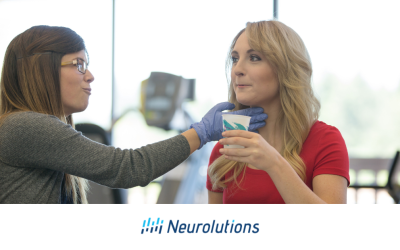
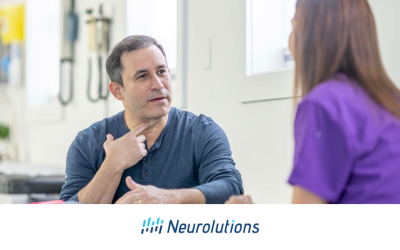
Dysarthria happens when the muscles used for speaking get weak or uncoordinated, which can make speech sound slurred or slow.1 The person knows exactly what they want to say and their language skills are intact, but their speech comes out slurred, slow, or unclear because the muscles for breathing, voice, and articulation aren’t working properly.
Apraxia
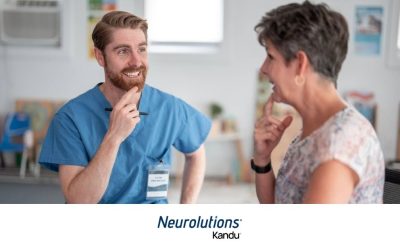
Apraxia is a motor planning problem.2 The person knows what they want to say and their muscles are strong enough, but their brain can’t properly coordinate the precise movements needed for speech. They might say “tarrot” instead of “carrot” or struggle to get sounds out at all, even though they can move their mouth fine for eating or other activities.
In simple terms, aphasia affects language and words, dysarthria affects muscle strength and/or coordination, and apraxia affects the brain’s ability to plan speech movements. A stroke survivor can have one, two, or all three of these conditions at the same time.
Core Stroke Speech Therapy Techniques
If speech therapy is needed after a stroke, these approaches may help patients regain their ability to communicate:
- Neuroplasticity speech exercises: Neuroplasticity describes the brain’s capacity to adjust and form new connections. Research shows that repeating activities often and practicing with intensity can help the brain change and grow.3 These ideas are the basis for some speech therapy methods. In therapy, people practice saying certain words, sounds, or phrases many times to help the brain rebuild connections. Therapists also use different prompts and clues to help people find the words they want to say.
- Singing therapy: Music-based melodic intonation therapy (MIT) is a treatment that uses music to help people with aphasia after a stroke.4 It works by activating the right side of the brain, which helps with rhythm and melody. Studies show that people who use MIT often make more progress with language than those who have regular speech therapy alone. This happens because many stroke survivors can sing words they can’t say, so therapists use music and rhythm to help them find their way back to normal speech.
- Visual and auditory aids: Picture boards show symbols and images patients can point to and express basic needs when words won’t come.5 Reading apps to speak text aloud, or GPS programs can provide turn-by-turn spoken directions when traveling. Picture dictionary apps, where patients can tap on images to hear correct pronunciation, may also be helpful.6
- Partner-supported communication strategies. Family members and care partners can use specific techniques to support communication, such as asking yes/no questions instead of open-ended ones and using gestures to reinforce meaning.7 These approaches could reduce frustration and keep conversations flowing while survivors rebuild speech skills.
 |
|
Integrating Therapy Into Daily Life
Speech practice can extend beyond formal sessions with providers, into daily routines.
Speech practice doesn’t have to stop when therapy ends, stroke survivors can keep improving by practicing throughout their daily routines. Activities of daily living are often the focus of rehabilitation after a stroke, and while therapy is vital, it is equally important to work on skills outside therapy appointments.8 Regular practice during everyday activities creates multiple opportunities to strengthen communication abilities.
Patients can turn mealtime into speech practice by describing what they’re eating, naming ingredients, or discussing how food tastes. This can include practicing naming clothing items and describing colors while getting dressed, as well as counting repetitions during exercise or physical therapy.
Reading and writing activities can be practical aphasia exercises that reinforce the language skills that are being rebuilt in therapy sessions. They can start with short passages and gradually work up to longer texts, or write shopping lists, journal entries, and letters to family members.
Group therapy sessions and conversation clubs may provide practice with other people. These settings enable patients to practice real conversations, work through communication challenges with others who understand stroke recovery experiences, and build confidence in social situations. Some hospitals and community centers offer stroke support groups that include conversation practice.
Many survivors now use digital tools to make speech practice more engaging. Apps that record pronunciation progress, virtual conversation groups, and tele-rehab sessions allow daily language practice from home. Tracking small improvements each week keeps motivation high and helps therapists personalize exercises.

Avoiding Frustration and Staying Motivated During Stroke Speech Therapy
Speech recovery after stroke requires patience and emotional support to navigate the rehabilitation process.
Patients will face ups and downs during their speech recovery journey. Understanding what to expect can help them stay motivated through the difficult moments. The speech therapy tips in this article can help stroke survivors cope with the emotional parts of recovery while improving their communication skills.
Patients should be patient with their progress. Speech recovery happens gradually, and the brain needs time to form new connections and relearn old patterns. Some days stroke survivors might feel like they’re making great progress, while other days might feel discouraging. Both experiences are part of the normal recovery process.
Stroke survivors should set small, achievable goals and celebrate small victories. Instead of focusing only on long-term outcomes like “speaking perfectly again,” they can break their recovery into smaller milestones. Maybe one week, their goal could be to say three new words clearly, or to have a five-minute conversation with a family member. When they reach these smaller goals, patients should take time to acknowledge their success. These victories build momentum and keep them moving forward.
Patients and care partners should watch for signs of depression and seek help when needed. Studies indicate that depression affects approximately one-third of stroke survivors overall, and it can significantly impact the motivation to participate in therapy.9 Symptoms might include persistent sadness, loss of interest in activities patients used to enjoy, changes in sleep patterns, or feeling hopeless about the recovery path. If patients or care partners notice these symptoms, they should talk to their healthcare team. Depression is treatable, and addressing it can actually improve speech recovery outcomes.
Conclusion
Stroke speech recovery depends on consistent therapy and strong professional support throughout the journey.
Research shows that early intervention with speech therapy leads to significantly better outcomes, with patients who receive therapy in the first month after stroke showing improved speaking ability at both one month and one year post-stroke.10
But the speech recovery journey doesn’t end when patients leave the hospital. Consistency and repetition matter more than perfection. Regular therapy sessions combined with daily practice at home help recovering brains form new pathways and strengthen existing ones.
Stroke survivors don’t have to navigate this alone. Professional speech-language pathologists can assess their specific needs, design targeted exercises, and adjust treatment plans as they progress. They’ll also teach care partners how to support patients’ communication efforts effectively.
Finding the right speech therapist and support network is crucial. Start with the American Speech-Language-Hearing Association (ASHA) ProFind directory to locate certified speech-language pathologists. Healthcare providers may also be able to provide assistance in finding qualified professionals.
For online community resources, consider the American Stroke Association’s Support Network, or the Aphasia Recovery Connection, which has a Facebook group with over 13,000 members worldwide.
Talk with your speech-language pathologist about at-home strategies that complement your clinic sessions. For more guidance, explore certified professionals through the ASHA ProFind directory or join community programs offered by the American Stroke Association.
©2025 Kandu, Inc. All Rights Reserved. | 8090.951.E
References
- Mayo Clinic. Dysarthria – Symptoms and causes. (Last Updated: July 12, 2024). Webpage: https://www.mayoclinic.org/diseases-conditions/dysarthria/symptoms-causes/syc-20371994
- Merck Manual [Consumer Version]. Apraxia. (Author: Juebin Huang, MD, PhD, Department of Neurology, University of Mississippi Medical Center). Webpage: https://www.merckmanuals.com/home/brain-spinal-cord-and-nerve-disorders/brain-dysfunction/apraxia
- Crosson B, Rodriguez AD, Copland D, Fridriksson J, Krishnamurthy LC, Meinzer M, Raymer AM, Krishnamurthy V, Leff AP. Neuroplasticity and aphasia treatments: new approaches for an old problem. J Neurol Neurosurg Psychiatry. 2019 October. Webpage: https://pmc.ncbi.nlm.nih.gov/articles/PMC8014302/
- Zhang X, Talifu Z, Li J, Li X, Yu F. Melodic intonation therapy for non-fluent aphasia after stroke: A clinical pilot study on behavioral and DTI findings. iScience. 2023;26(9):107453. Webpage: https://pmc.ncbi.nlm.nih.gov/articles/PMC10517365/
- Stroke Association. Communication Picture Book. Webpage: https://www.stroke.org.uk/communication_picture_book_community_guide.pdf
- American Stroke Association. Technology for People with Aphasia. (Last Updated: April 16, 2024). Webpage: https://www.stroke.org/en/about-stroke/effects-of-stroke/communication-and-aphasia/stroke-and-aphasia/technology-for-people-with-aphasia
- Heart and Stroke Foundation. Communication. Webpage: https://www.heartandstroke.ca/stroke/recovery-and-support/physical-changes/communication
- Johns Hopkins Medicine. Stroke Recovery Timeline. (Last Updated: January 10, 2024). Webpage: https://www.hopkinsmedicine.org/health/conditions-and-diseases/stroke/stroke-recovery-timeline
- Evidence-Based Review of Stroke Rehabilitation (EBRSR). Clinician’s Handbook. Webpage: http://www.ebrsr.com/clinician-handbook
- Howard S, Varley R, Bose A, Holliday R, Pickering S, Seymour A, Ashley E, Sage K. Better long-term speech outcomes in stroke survivors who received early clinical speech and language therapy: What’s driving recovery? Neuropsychological Rehabilitation. 2022. Webpage: https://www.tandfonline.com/doi/full/10.1080/09602011.2021.1944883